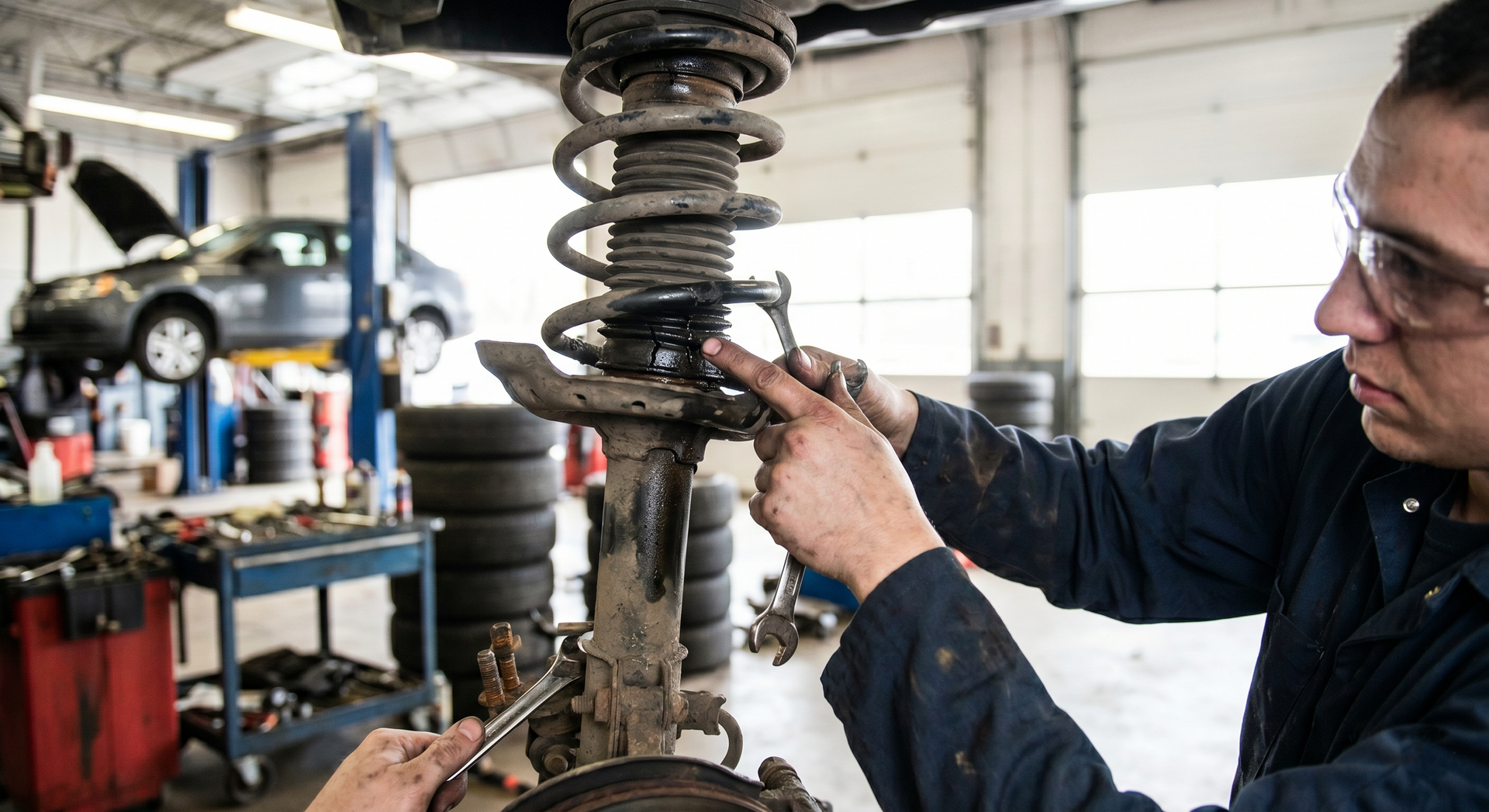

How to Tell If Your Suspension System Needs Repair in Lincoln, NE
Suspension Repair Signs in Lincoln NE

Your suspension system plays a critical role in how your vehicle handles, rides, and stays stable on the road. Many Lincoln, NE drivers do not think about suspension until they begin feeling unusual bouncing, steering instability, or uneven tire wear. Unfortunately, ignoring suspension issues can affect not only ride comfort but also braking performance, tire life, and overall safety.
Lincoln’s road conditions, including potholes, construction zones, gravel roads, and harsh winter freeze-thaw cycles, put additional strain on suspension components. Over time, shocks, struts, control arms, bushings, and ball joints wear down. Recognizing the early warning signs of suspension problems can help you avoid larger repairs and maintain full control of your vehicle.
In this guide, we will explain how your suspension works, the common symptoms of failure, and what Lincoln drivers should do if they suspect a problem.
What Does the Suspension System Do?
Your suspension system connects your vehicle to its wheels while absorbing shocks from the road. It works together with your steering and braking systems to provide stability and control.
Key suspension components include:
- Shocks and struts
- Springs
- Control arms
- Ball joints
- Tie rods
- Bushings
- Sway bars
The system is designed to:
- Absorb bumps and potholes
- Maintain tire contact with the road
- Support vehicle weight
- Improve steering response
- Enhance braking stability
When one component fails, it can affect the entire system.
Why Lincoln Roads Are Hard on Suspension Systems
Lincoln drivers face specific challenges that accelerate suspension wear:
Potholes and Road Damage
Winter freeze-thaw cycles create potholes throughout the city. Striking potholes at speed can damage struts, bend control arms, and knock wheels out of alignment.
Gravel Roads
Many rural areas surrounding Lincoln have gravel roads. Constant vibration and debris exposure stress suspension components.
Heavy Snow and Ice
Winter conditions force drivers to brake harder and steer more aggressively, placing additional strain on suspension parts.
Construction Zones
Lincoln’s ongoing development leads to uneven road surfaces and detours that can impact suspension health.
Common Signs Your Suspension Needs Repair
1. Excessive Bouncing After Hitting a Bump
If your vehicle continues to bounce after driving over a speed bump or pothole, your shocks or struts may be worn.
A simple test:
Push down firmly on the hood of your parked vehicle and release it. If it bounces more than once or twice, suspension components may be failing.
2. Uneven or Rapid Tire Wear
Suspension issues often cause uneven tire wear patterns.
Look for:
- Bald spots
- Cupping
- Excessive wear on one edge
When suspension cannot maintain proper tire contact, tires degrade faster.
3. Pulling to One Side
If your vehicle drifts left or right while driving straight, this may indicate:
- Suspension misalignment
- Worn control arms
- Damaged tie rods
While alignment problems can also cause pulling, suspension damage is often a contributing factor.
4. Nose Dives When Braking
When braking, your vehicle should remain relatively level. If the front end dips dramatically, worn shocks or struts may be to blame.
This not only affects comfort but also increases stopping distance.
5. Steering Feels Loose or Unstable
If your steering feels loose, overly sensitive, or unstable at highway speeds, worn suspension components may be reducing control.
This is especially dangerous during Lincoln’s icy winter months.
6. Clunking or Knocking Sounds
Strange noises when driving over bumps often signal suspension issues.
Common sounds include:
- Clunking
- Knocking
- Rattling
These may indicate worn ball joints, damaged bushings, or loose sway bar links.
7. Vehicle Sits Unevenly
If one corner of your vehicle sits lower than the others, a spring or strut may be damaged.
An uneven stance often affects alignment and tire wear.
How Often Should Suspension Be Inspected?
Suspension components should be inspected at least once per year or every 12,000 to 15,000 miles.
You should also schedule an inspection if:
- You hit a large pothole
- You are involved in a minor accident
- You notice unusual tire wear
- Steering feels unstable
Preventative inspection can catch issues before they escalate.
What Happens If You Ignore Suspension Problems?
Delaying suspension repairs can lead to:
- Increased tire replacement costs
- Longer braking distances
- Poor vehicle handling
- Damage to steering components
- Reduced fuel efficiency
In severe cases, failing ball joints or tie rods can create dangerous driving conditions.
Shocks vs. Struts – What’s the Difference?
Many drivers use the terms interchangeably, but they serve slightly different roles.
Shocks
Shocks control the movement of springs and reduce bounce. They are separate components.
Struts
Struts are structural components that combine shock absorption with additional support functions.
Some vehicles have shocks, some have struts, and some have both.
Signs It’s Time to Replace Shocks or Struts
Most manufacturers recommend replacement around 50,000 to 100,000 miles, depending on driving conditions.
Signs include:
- Rough ride
- Fluid leaking from struts
- Excessive bouncing
- Increased stopping distance
- Steering instability
Lincoln’s rough roads may shorten that lifespan.
Suspension and Alignment – How They Work Together
Wheel alignment ensures your tires meet the road at the correct angle. Suspension components maintain that alignment.
If suspension parts wear out, alignment will not hold properly.
Drivers who frequently need realignment may actually have underlying suspension damage.
Can Suspension Issues Affect Fuel Efficiency?
Yes. Poor suspension can:
- Increase rolling resistance
- Cause uneven tire wear
- Force engine to work harder
While not always obvious, suspension repairs can indirectly improve fuel economy.
Frequently Asked Questions
How long do suspension components last?
It varies based on driving habits and road conditions. Many parts last between 50,000 and 100,000 miles.
Is suspension repair expensive?
Costs vary depending on the component. Replacing worn shocks is typically less expensive than repairing widespread suspension damage caused by neglect.
Can I drive with bad suspension?
Short-term driving may be possible, but handling and safety are compromised. Long-term driving can cause additional damage.
Does cold weather affect suspension?
Cold temperatures can stiffen rubber bushings and reveal weaknesses in worn components.
Should I replace shocks and struts at the same time?
Often yes, especially if mileage is high. Replacing in pairs ensures balanced performance.
Why Lincoln Drivers Choose Gracious Auto Repair
At Gracious Auto Repair in Lincoln, NE, we understand how local road conditions affect suspension systems. Our technicians inspect shocks, struts, ball joints, bushings, and alignment components to ensure your vehicle remains stable and safe.
Whether you’ve noticed unusual noises, steering changes, or uneven tire wear, addressing suspension issues early can prevent further damage and protect your vehicle’s performance.
Maintaining a strong suspension system is essential for safe driving in Lincoln’s changing seasons.